The Practice of Yoga Beyond Poses

A Journey into Philosophy, Awareness, and Embodiment
Many yoga journeys have a point where things start to shift.
What once felt similar to a physical activity, such as stretching, strengthening, and moving through sequences, suddenly turns into something more peaceful, meaningful, and personal. The breath is no longer just a technique; it acts as a bridge between body and mind. The stillness gradually becomes more than just a pause. And a question eventually comes up:
Is it true that yoga is only about poses?
The truth? Spiritual Yoga practice begins where poses end. People learn this over time.

Beyond the Mat: Remembering What Yoga Really Is
Yoga is fundamentally not a performance or a physical accomplishment. It is a journey, a means of connecting with ourselves, other people, and life in general. Asana, or postures, might be the most obvious aspect of the practice, but they are simply one aspect of a much bigger picture.
What are yoga's foundational teachings? It is a state of union, found in ancient teachings like the Yoga Sutras and Tantric traditions. A union body and breath, mind and heart, self and the greater whole.
Yoga, at this point, starts its transition. A transition from form to awareness.
Awareness is not a concept; it’s a living experience.
When you're feeling stressed out, you become aware of your breath.
The way you react when you need to respond.
How do you sit in discomfort instead of just pushing it away?
Yoga becomes more about your life than it is about what you do on the mat.

What Is Yoga Philosophy?
Yoga is an awareness practice. It’s about connecting with your inner self.
This word “Yoga” originates from the Sanskrit word “Yuj”, which means to combine or join. People often mistake yoga for just body and breath, but it is something deeper. It is a reminder of the connection between an individual self and the larger consciousness.
Over time, the ancient practice of Yoga has become recognized through its physical expression. It slowly became all about the postures, the sequences, the movement. But a strong but quiet foundation lies underneath that: A way of living philosophy.
Beautifully described in the ancient texts, such as the Yoga Sutras of Patanjali, these texts are not meant to be stored away or kept on a shelf as a theory. They are supposed to be experienced, felt, and revisited repeatedly.

Philosophy as a Living Practice
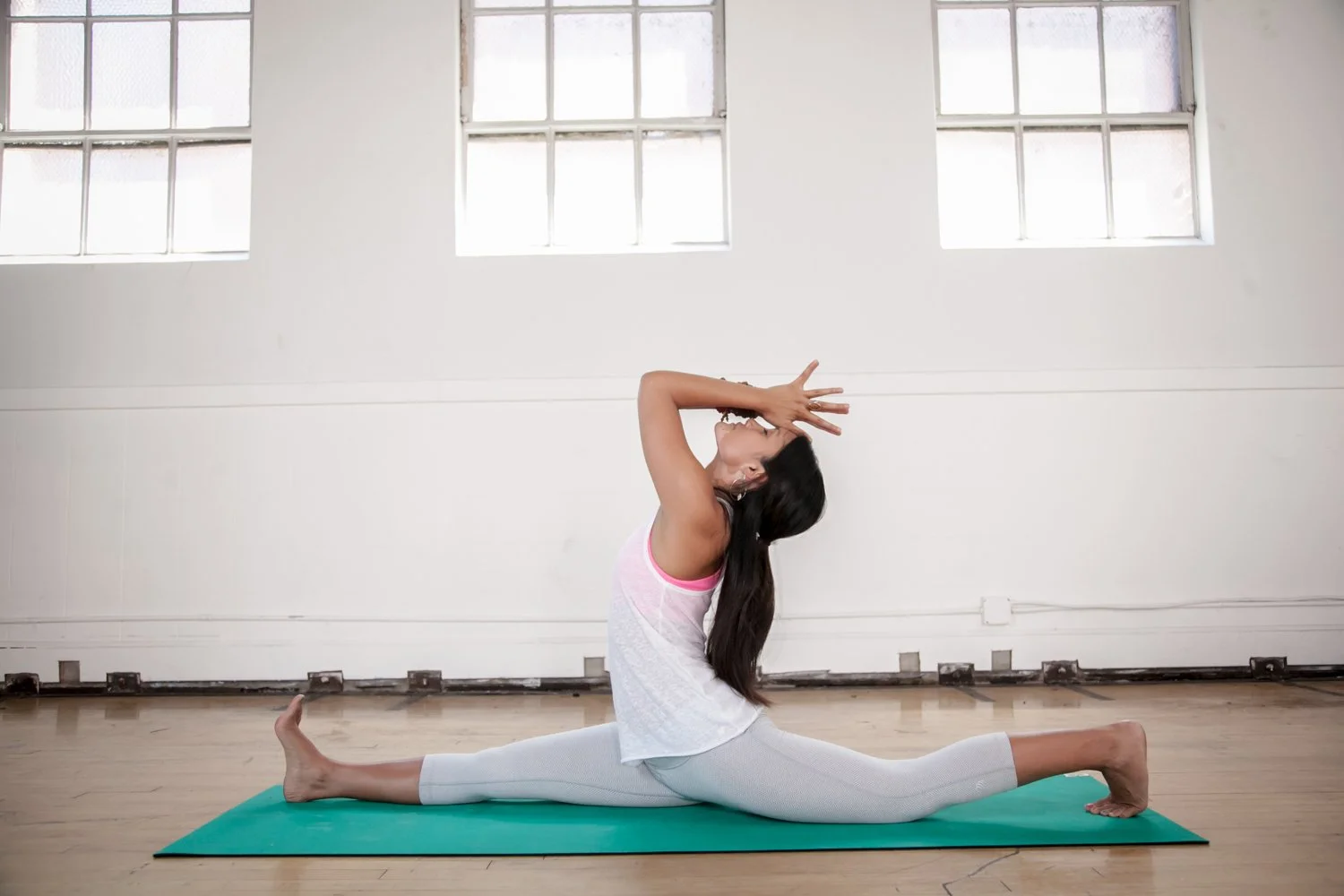
A common misconception about this philosophy is that it's something you should read, study, or memorize. In reality, it’s meant to be experienced.
Teachings such as the Yamas and Niyamas, the Eight Limbs of Yoga, Tantra, and non-duality are not abstract concepts. They are identical representations of daily life.
When things don't go as planned, how do you speak to yourself?
When someone is hurting, how do you make space for them?
When life is not clear or stressful, are you able to stay calm in the moment?
These questions are related to the teachings of yoga.
When philosophy goes far beyond the mind and into the body, influencing how we look, listening abilities, and lifestyle choices, it takes on significant meaning.
The Eight Limbs: A Living Path
The Eight Limbs of Yoga, a road plan for self-realization and personal development, are at the core of yoga philosophy. Even though these lessons date back thousands of years, they are still very applicable in today's hectic society.
It starts with the way we interact with our surroundings.
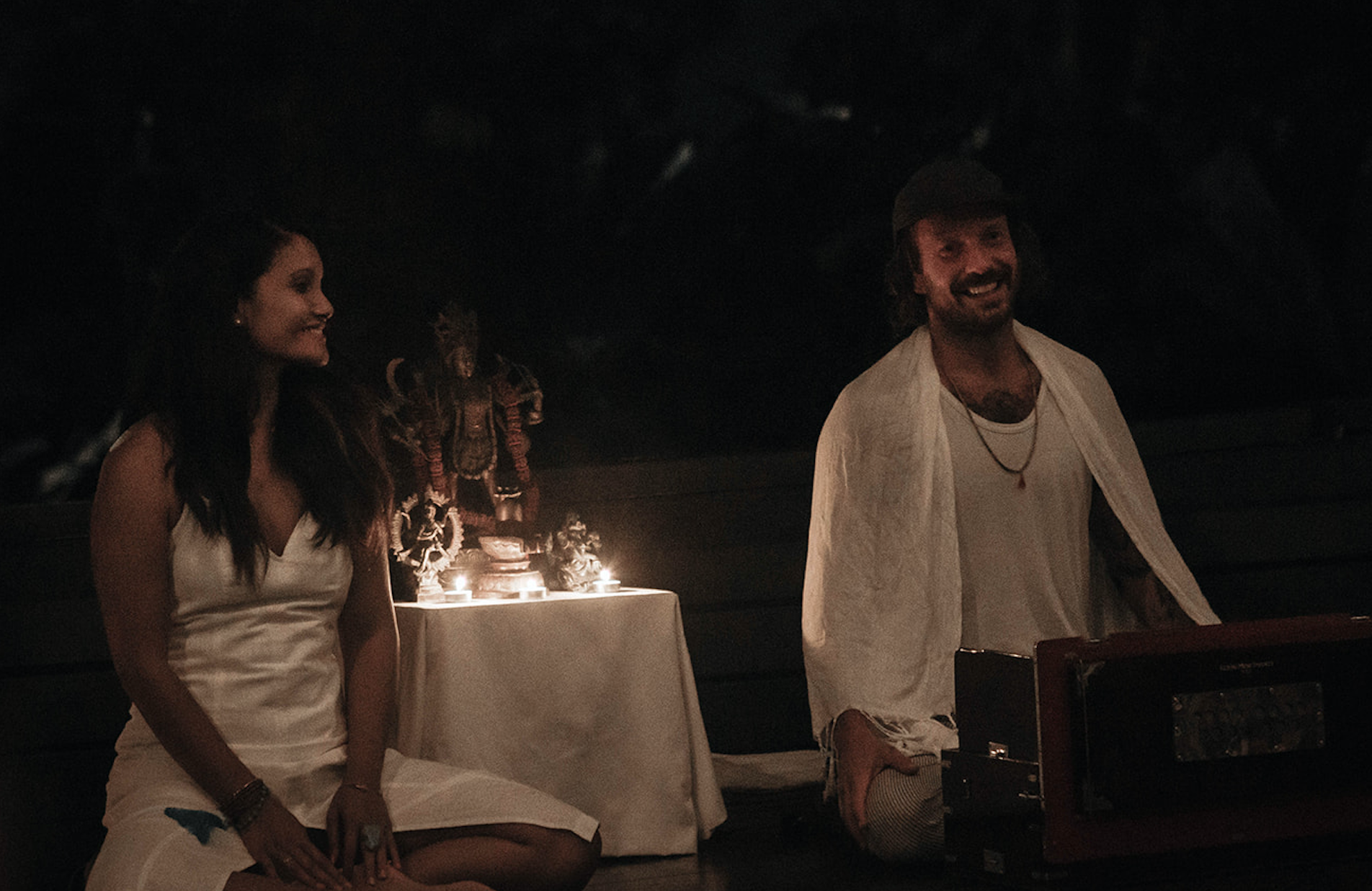
The Yamas encourage truthfulness (satya),
Non-violence (ahimsa), non-stealing (asteya), moderation (brahmacharya), and non-possessiveness (aparigraha). They ask us to move through life with kindness, but as a natural expression of presence, not as an obligation.
Then we look within

The Niyamas are self-reflective exercises
that involve cleanliness (shaucha), self-discipline (tapas), self-study (svadhyaya), contentment (santosha), and surrender (ishvarapranidhana). It teaches that progress does not come with force but comes from determination, curiosity, and care.
The body then turns into the gateway.
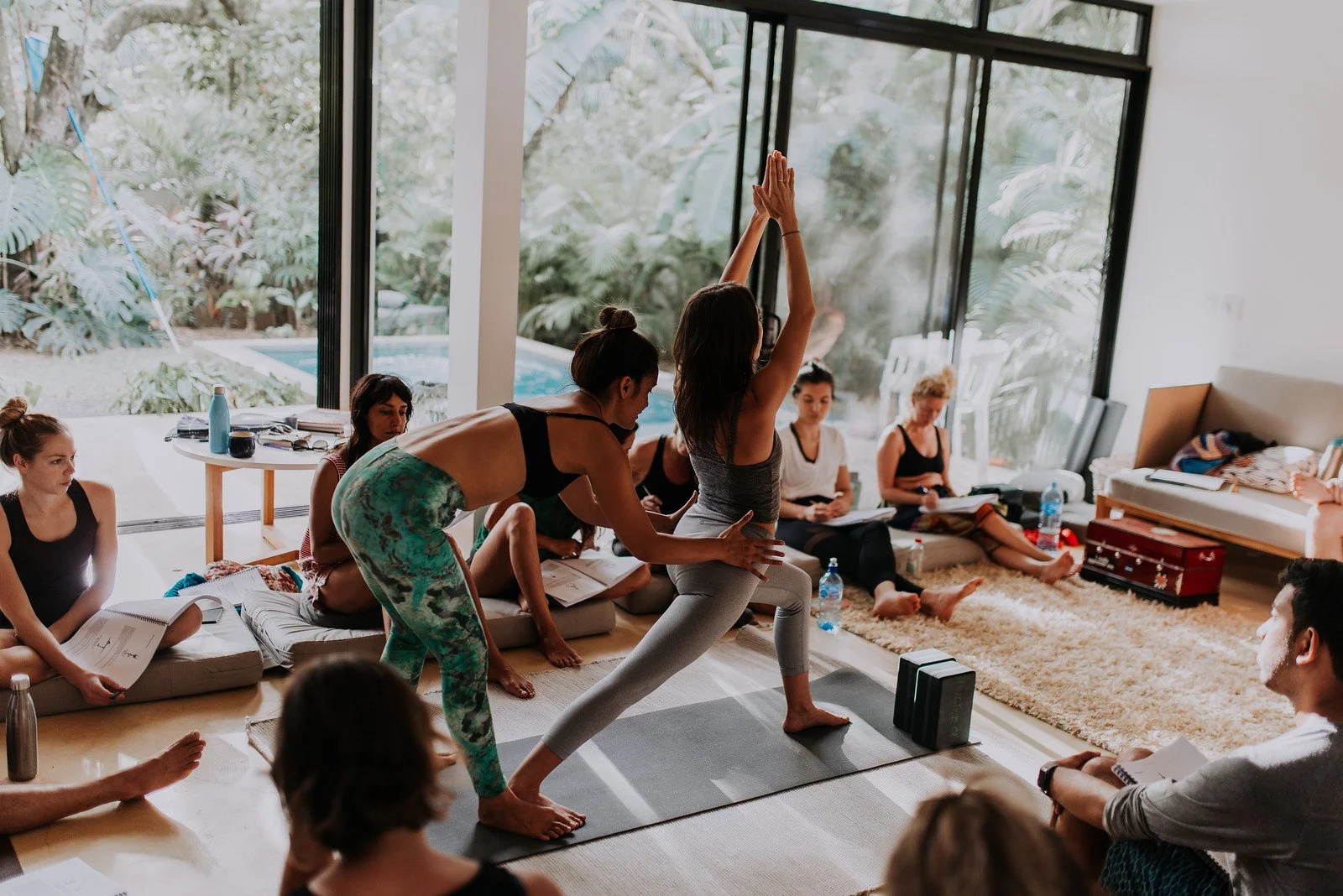
Asana is a physical activity
that focuses on creating space, not merely forming a shape. Space to listen, to feel, to get the body ready for silence.
The breath comes next.

The rhythm of breathing in and out
is gently brought to awareness through Pranayama. The breath eventually turns into an anchor, a means of bringing oneself back to the here and now, particularly when life seems overwhelming.
Then a tiny change starts to occur.
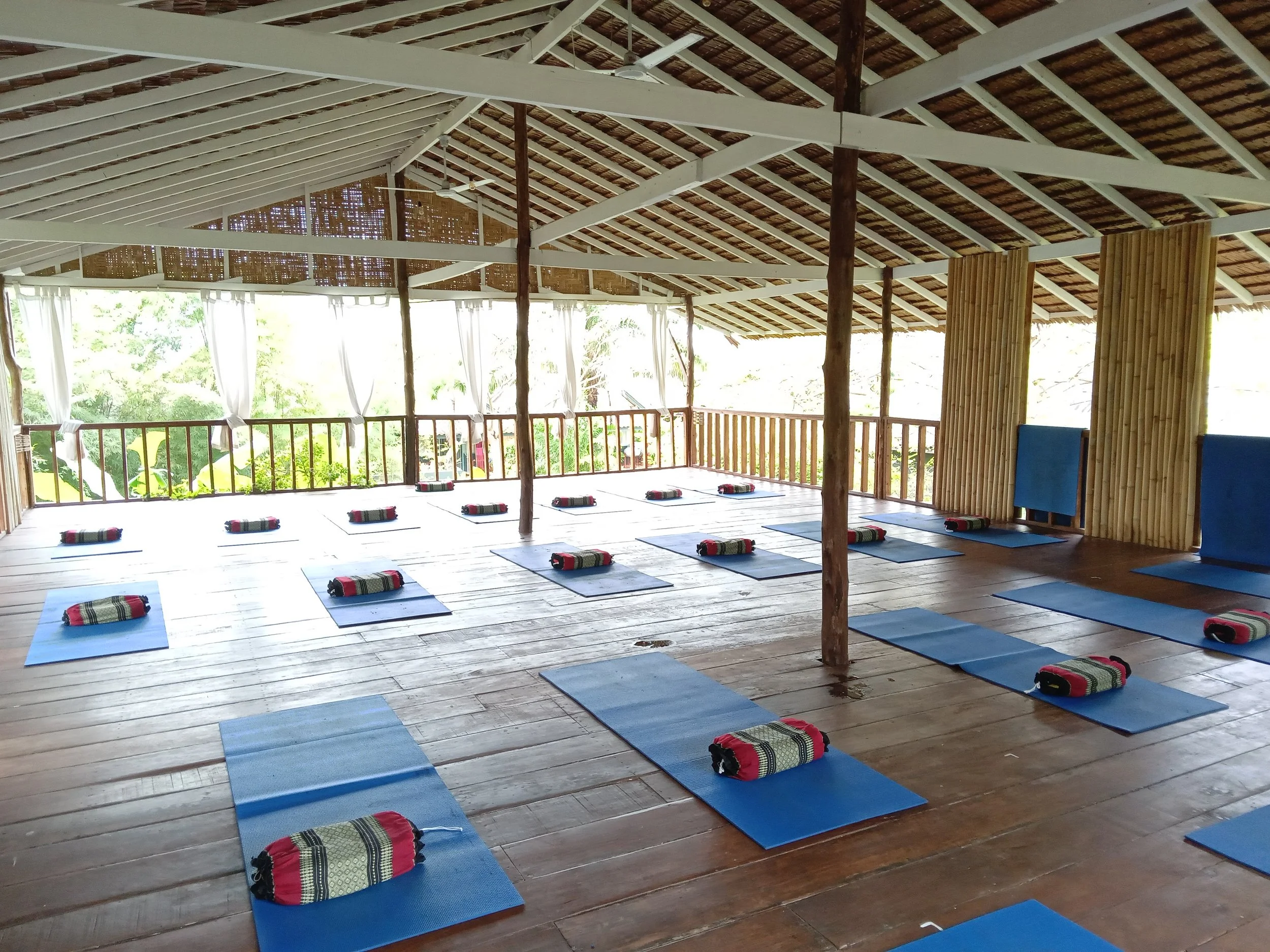
Pratyahara encourages us to go deep,
detach from continuous stimulation, and rebuild a connection with our inner selves.
After that point, concentration becomes more intense.

Dharana, or concentration,
becomes more about letting the mind relax than it is about making effort. The focus becomes more consistent and less fragmented.

This calmness leads to Dhyana, or meditatio
which we naturally enter. A calm consciousness that is clear, vast, and intensely present.

And occasionally, even for a brief period of time, there is a sense of Samadhi
And occasionally, even for a brief period of time, there is a sense of Samadhi, or unified consciousness, where the distinction between life and self starts to blur.

Bringing Yoga Philosophy Into Daily Life
To practice yoga spiritually, you don't have to leave your life behind.
Your life is the practice in a lot of ways.
These lessons are meant to be slowly and imperfectly lived in the pace of your daily moments, not perfected or rehearsed.
It could start with something as basic as thankfulness.
A silent moment in the morning. A gentle acceptance of what is presently there. Not glorified, not imposed, just observed. This eventually turns into a method of finding contentment, even in situations where life seems incomplete.
You could remember to go back to it when you're feeling overwhelmed or stressed. Take a slow breath. Exhale steadily. The breath works as a bridge, returning you to the stability of the present from the chaos of the mind.
As your awareness grows, you might start to see where you're holding on, emotionally, physically, or even in your day-to-day activities. And you begin to let go of what is unnecessary in a gentle, pressure-free manner. Not always, but as a modest decision in favor of ease and simplicity.
Also, there are times when you get introspective. You take a step back from the constant pull of distractions, sound, screens, and expectations, and give yourself permission to simply be. even for a short while. even throughout a hectic day.
And at some point, a feeling of balance starts to take form. A felt balance against an ideal one. a rhythm between doing and being, effort and rest, and movement and silence.
Yoga through awareness practice starts to live within you in this way. Instead of viewing it as something apart from your day, think of it as a means of confronting it with awareness, presence, and a little more gentleness.
Awareness: The Bridge Between Practice and Life
Awareness is the thread that ties everything together.
Awareness is what turns calmness into insight, breath into presence, and movement into meditation. Even the most advanced practice might stay on the surface level without awareness. The most basic moment can become intense with mindfulness.
You start to observe:
The subtle changes in your energy levels throughout the day
The thinking patterns that repeat without being asked for.
How you manage stress on a physical, emotional, and energy level
And something softens in that observation. Space starts to open, and the ability to choose becomes available.
This is the point where the transformation begins with a clear vision, not with force.

Embodiment: Living the Practice
A spiritual yoga practice becomes real when it is embodied.
It involves including all of the concepts you have ever learned, philosophy, breath, movement, and awareness, into your daily activities. It has nothing to do with mastery or perfection. It has to do with living in harmony with your knowledge.
Embodiment could appear as:
Choosing relaxation when your body needs it
Speaking the truth with compassion
Staying steady in the face of uncertainty
Treating yourself with empathy instead of criticism
It is strong but subtle.
Also, it takes time for it to happen. It grows gradually with regular practice, self-awareness, and a willingness to stay in the moment.
How Shivakali Yoga Brings This to Life
This spiritual aspect of yoga practice is merged into everything at Shivakali Yoga and is not separated from the physical.
Yoga is seen as a real, breathing path here.
The day usually starts with Sadhana in the trainings and retreats. Sadhana is the combination of meditation, chanting, movement, and breathing, not as a task to be performed successfully, but as a means of completely experiencing the present.
Philosophy is taught as direct experience, not just in theory, and it is explored through discussion, reflection, ritual, and living discovery. Tantra, Buddhism, and the yogic tradition all infuse their teachings into everyday life. Practitioners are encouraged to live, not merely understand them.
Participants are slowly taken into the circle through community, ceremony, mantra, and time spent in nature. There is room to ask questions, listen, feel, and reconnect.
Both knowledge and transformation emerge at the same time.
A closer bond with ourselves.
A stronger feeling of purpose.
A more peaceful and grounded way of living.

Yoga is more than just poses.
This is yoga, a spiritual practice, as a way of life.

Step Into the Practice Beyond the Mat
Yoga gently leads us back into being in a world that often pushes us toward doing. Beyond poses, the practice is something you start to live and not something you have to achieve. A silent revealing in which life itself becomes the teacher, awareness grows, and the body begins to relax.
The method of practicing does not exist outside of your daily life. It’s encouraged, nurtured, and shared in the community at Shivakali Yoga. More than a movement, yoga here becomes reflection, connection, ritual.
This is your invitation to take up yoga as a path of embodiment, where awareness sets the way, breath is sacred, and philosophy is lived through experience.

Begin Your Journey
Find out more about Shivakali Yoga's upcoming spiritual yoga retreats and yoga teacher trainings, where you can experience these lessons personally.
If you want to expand your personal practice or aspire to be a teacher, you will be guided towards the realization of yoga as a way of life.
Go to ShivakaliYoga.com to see what's coming up next.
Follow Us